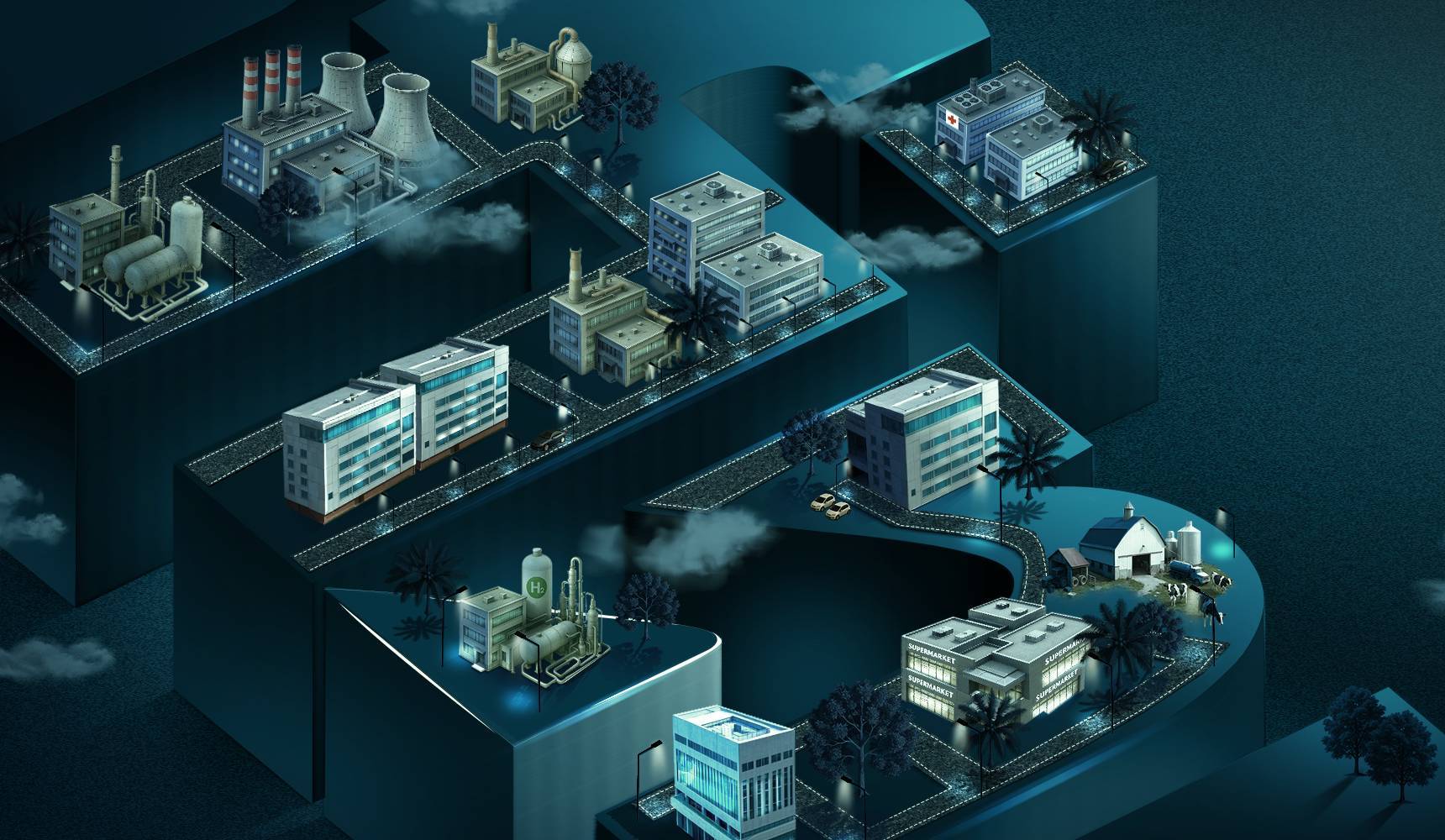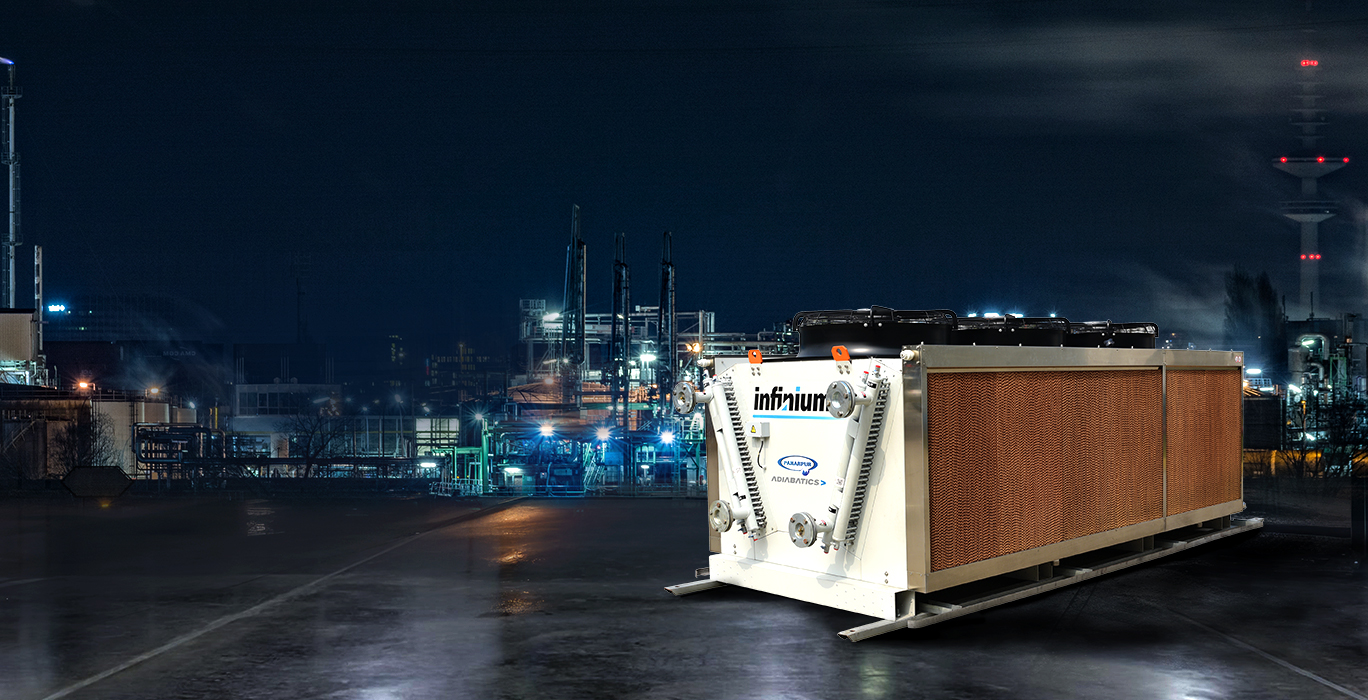
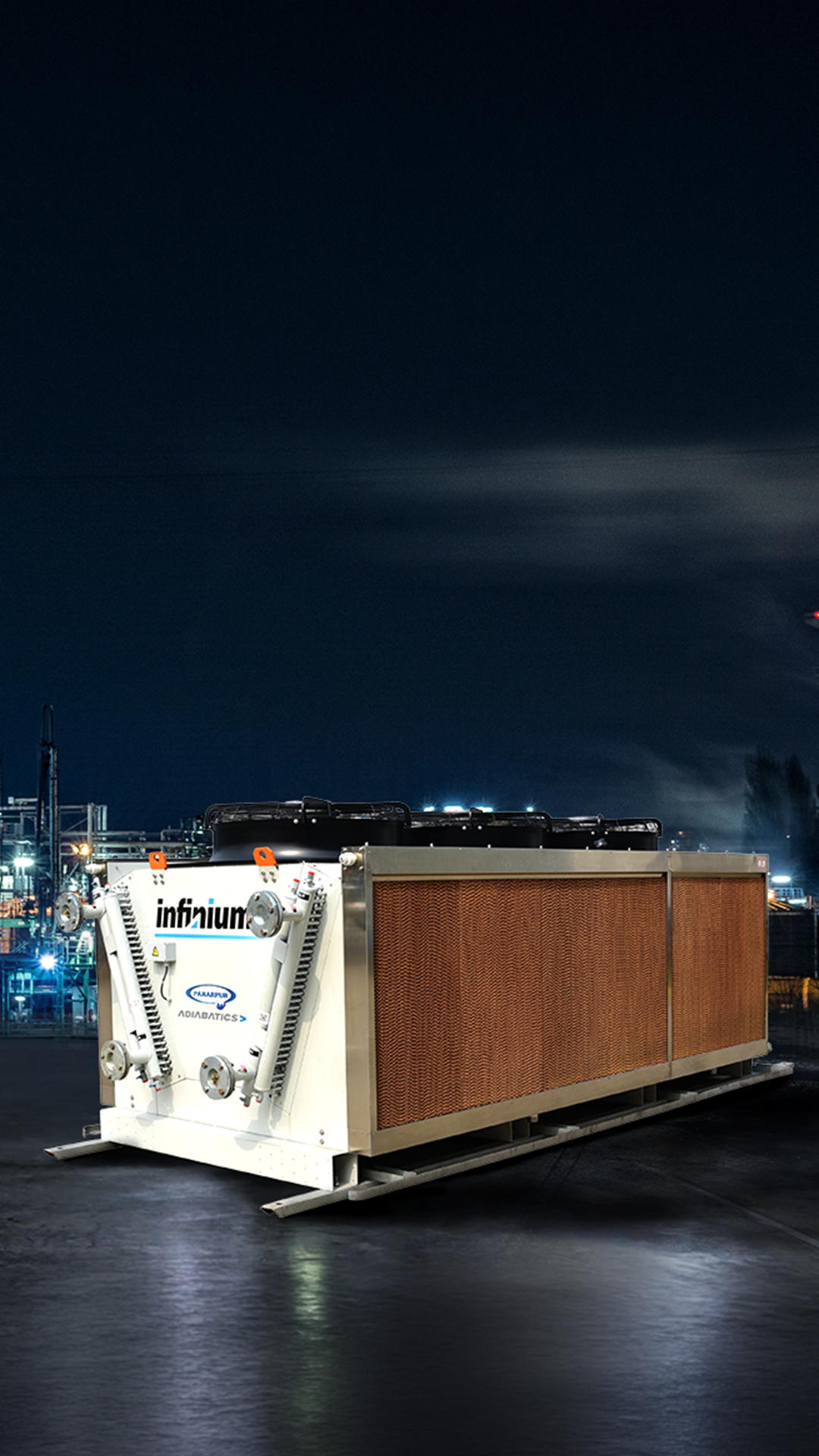



The Infinium NEO range of adiabatic coolers delivers next-generation cooling for industries where performance, sustainability, and hygiene are non-negotiable. Designed with Industry 4.0 automation, Neo systems offer up to 95% water savings and 50% lower energy consumption compared to traditional cooling systems. Whether you're operating in data centers, pharmaceuticals, food processing, automotive, steel, or manufacturing, Infinium Neo ensures high thermal efficiency with zero Legionella risk and minimal maintenance.
Hybrid dry/wet operation delivers substantial water savings while maintaining thermal performance.
The system operates without scaling concerns or routine chemical dosing requirements.
Optimised cooling architecture delivers high thermal efficiency within a compact system design.
EC/VFD fan technology enables efficient and dependable cooling across varying operating conditions.
Automated drainage and hygienic system design eliminate Legionella risk.
Plug-and-play automation with BMS integration enables intelligent monitoring and control.
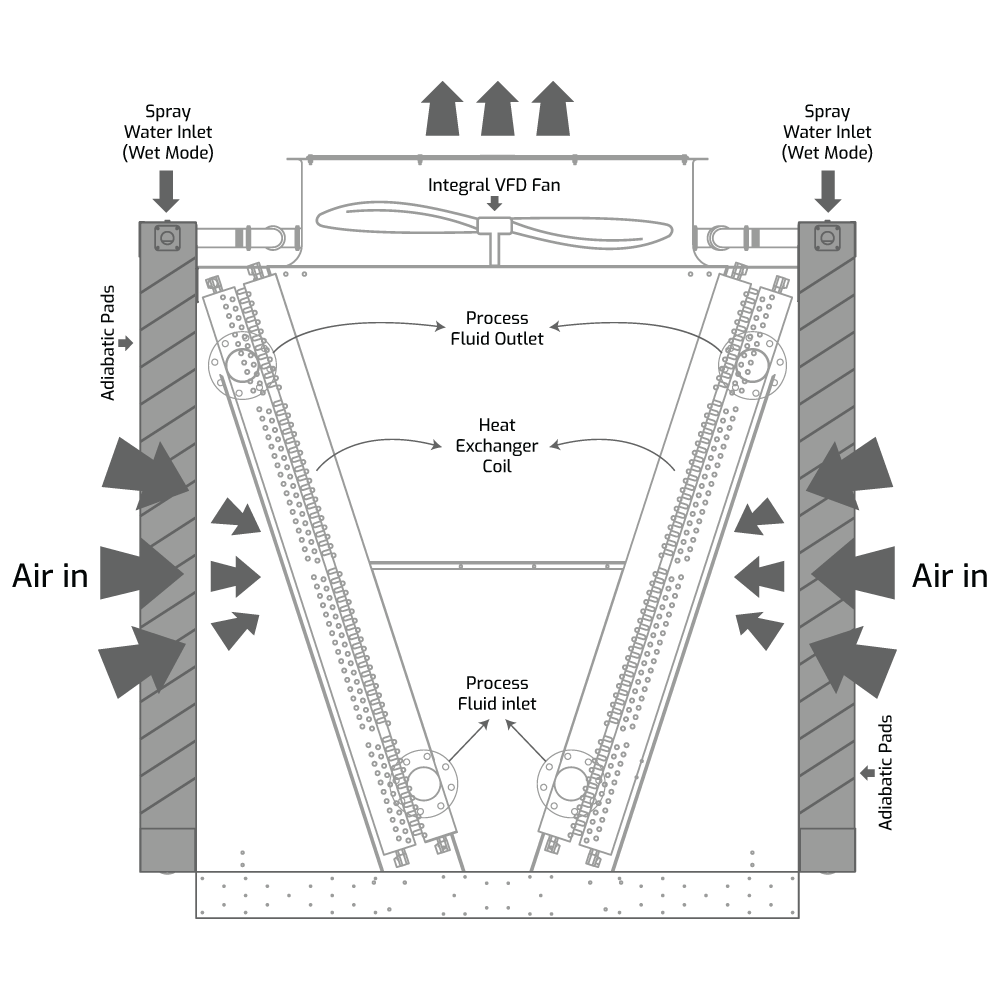
Infinium NEO intelligently adapts between dry and wet cooling modes based on real-time operating conditions.
High-efficiency EC fans with VFD technology reject heat without using water.
When temperatures rise, adiabatic pads activate to pre-cool ambient air and improve heat rejection.
Industry 4.0 automation continuously manages cooling variables based on real-time conditions.
The closed-loop system helps prevent contamination and reduces water losses during operation.
Automated drainage and a hygienic design eliminate scaling and reduce the need for chemical dosing.
Infinium is an automation-driven, smart cooling device that yields the best of both water-cooled and air-cooled technologies. The process fluid runs in closed-circuit through aluminum finned copper tubes, avoiding exposure to atmospheric air. A set of water and ambient dry bulb temperature sensors provide inputs to the control system. The system then controls the fan power & water consumption while maintaining the desired output cold water temperature.
As hot water temperature rises, the fans switch on and ramp up together to reach their pre-programmed maximum speed in an effort to reject the maximum thermal load to the atmosphere. At this stage, the adiabatic coolers operate in dry mode, where the equipment delivers the desired cold water temperature through dry cooling only.
The dry mode of operation continues as long as the cold water temperature does not exceed the desired limit, either due to an increase in ambient dry bulb temperature or an increase in heat load on the system.
If the cold water temperature rises beyond the desired limit. The unit transitions to wet mode. In wet mode, the adiabatic cooler uses wetted pads to pre-cool the ambient air entering the tower to near its wet bulb temperature. This pre-cooled air is then used to cool process water or refrigerant. Thus, the process fluid can be cooled to below ambient dry bulb temperature.
Up to 95% water savings against conventional water-cooled systems.
Up to 50% energy savings against conventional air-cooled systems.

 SDG 6
- Clean Water: Save millions of litres annually
SDG 7
- Clean Energy: Lower industrial energy demand
SDG 13
- Climate Action: Reduce carbon emissions with efficient cooling
SDG 6
- Clean Water: Save millions of litres annually
SDG 7
- Clean Energy: Lower industrial energy demand
SDG 13
- Climate Action: Reduce carbon emissions with efficient cooling


Innovation that Moves Industry Forward Responsibly!